Pack for your itinerary, not a postcard
Egypt is not one continuous desert excursion. A week combining Cairo, Luxor and a Nile stay involves urban walking, dusty archaeological sites, air-conditioned vehicles and evenings outdoors. Start with your actual route and season, then choose a small set of clothes that work together. A light suitcase is easier to handle at stairs, boats and railway platforms than several bags of just-in-case outfits.
For a seven-night trip with access to laundry, the list below is our suggested starting point, not a baggage allowance or a rule about how anyone must dress. Add specialist items only for activities you have actually booked.
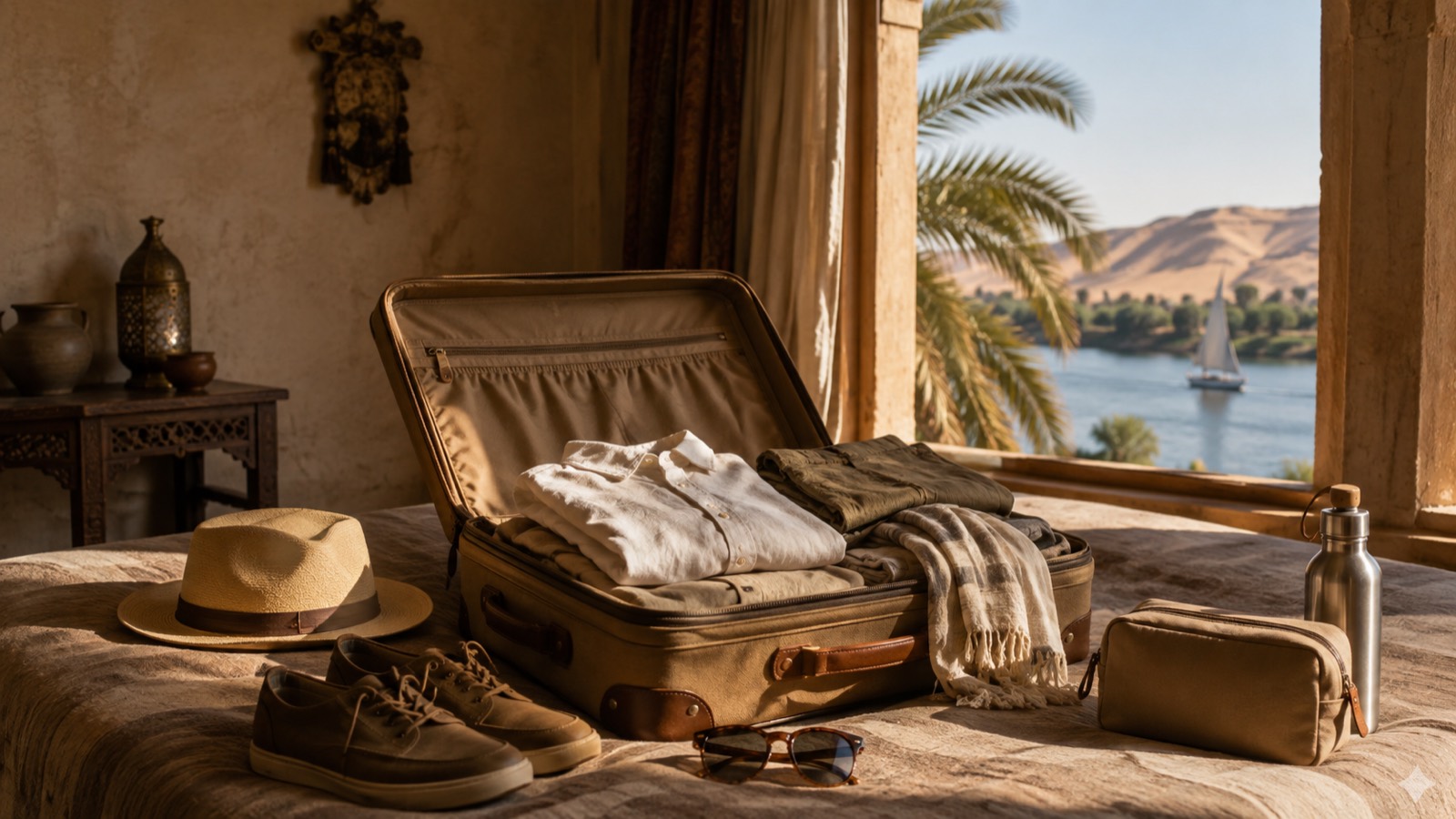
- Four or five breathable tops, including at least two with sleeves.
- Two pairs of loose trousers, plus an optional long skirt or relaxed dress.
- Enough underwear and socks for your laundry plan, and sleepwear.
- One light overshirt or cardigan; a warmer layer for winter.
- Broken-in walking shoes, plus one light pair for your accommodation.
- A sun hat, sunglasses and a light scarf or wrap.
- Swimwear if your stay includes a pool or a beach, with a cover-up for leaving that area.
What to wear at temples and around town
Loose linen, cotton blends or breathable technical fabrics can be more comfortable than tight jeans for a day of walking. Long, lightweight sleeves and trousers are a useful way to cover skin without building an outfit around heavy layers. Avoid trailing hems that drag on dusty steps. Try the complete outfit at home with your day bag: if the waistband, shoulder straps or shoes already irritate you, a long sightseeing day will not improve them.
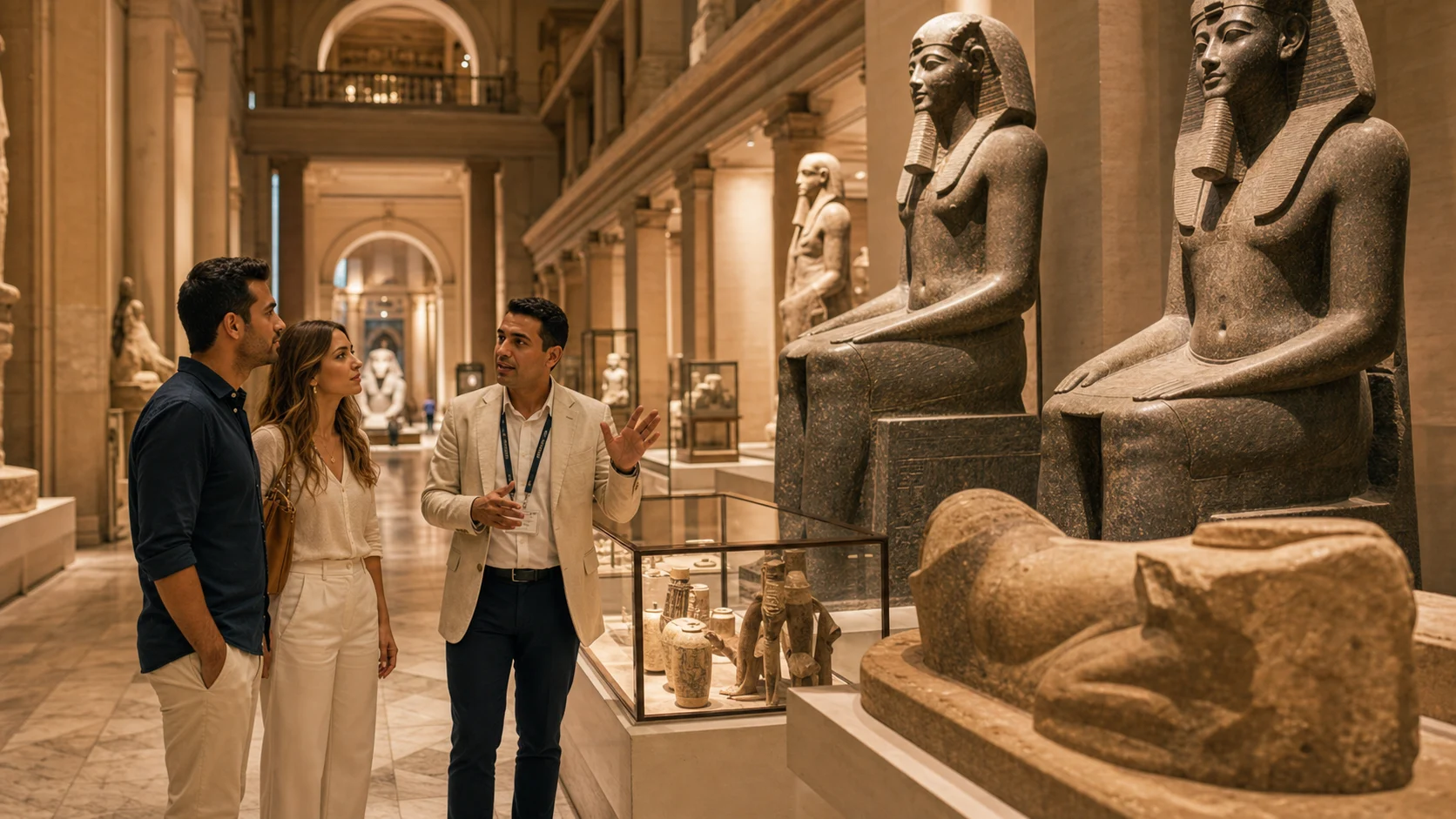
Dress expectations differ between a resort pool, a city neighbourhood and a place of worship. The FCDO advises modest dress particularly in rural areas, mosques and souqs. For a mosque visit, bring clothing that covers shoulders and legs, and a scarf if you may be asked to cover your hair. Follow the site’s own directions about footwear and entry. There is no single outfit that guarantees freedom from unwanted attention.
Shoes matter more than a perfect photograph
Choose shoes with a secure fit and a sole you trust on uneven stone, ramps and dusty ground. New sandals and smooth-soled fashion shoes are poor experiments for your first temple day. If you prefer sandals, bring closed walking shoes as a second option rather than relying on one pair for every surface.
Check the physical demands of your selected tombs and excursions before packing. A comfortable shoe cannot remove steep stairs or make an inaccessible site accessible. Tell your guide about mobility needs, and ask about distances, seating and the option to skip a difficult section. For a balloon flight, follow the operator’s footwear and clothing instructions; loose accessories should be secured.
Adjust for the month and the time of day
For a summer Upper Egypt itinerary, favour airy clothes and easy access to a hat and water. Build your day around shade and cooling breaks rather than assuming the right fabric makes prolonged heat harmless. For winter, add a sweater or fleece and a wind-resistant outer layer. A pre-dawn departure and a breezy evening on the Nile can feel very different from a sunny midday temple visit.
A layered outfit is more flexible than a bulky coat you cannot comfortably carry once the day warms up. Look at the forecast for every city on your route just before departure, not only the forecast for Cairo. Keep your first morning’s clothing accessible if you arrive late.
Keep the day bag small and useful
Pack the things you will actually use between your room and your return. A zipped bag that leaves your hands free is useful on steps and when boarding a boat. Choose one that fits your body rather than carrying a large camera backpack for a phone-only day.
- Water, sun protection and your regular essentials.
- A working payment card, a backup kept separately and some small local notes.
- Your phone, saved meeting point and the guide or driver’s contact.
- Tissues, hand sanitiser and a small personal care pouch.
- A light layer when the route includes an early start or an evening on the river.
- The tickets and identification your specific operator or venue requires.
Documents, medication and the first 24 hours
Keep your passport, travel documents, essential medication and a change of clothes in your hand luggage. Save booking confirmations offline and keep a separate copy of important documents. Protect those copies: do not leave passport photographs in an open shared chat or hand them to anyone who cannot explain a legitimate need.
Medicine rules need individual checking. The FCDO notes that some medicines require permission and recommends appropriate prescription documentation. Read the current guidance and consult your clinician or the relevant Egyptian authority before travel if you are uncertain. This checklist is not a medical assessment, and it does not establish that a medicine is permitted. Take out insurance appropriate to your itinerary and keep the assistance number accessible.
Electronics and photography without extra baggage
Bring the cables you have tested, an adapter appropriate to your devices and destination, and a modest charging setup. Check your airline’s current battery and baggage rules before packing power banks. A plug adapter is not a voltage converter: read the input rating on each appliance, especially hair tools.
For most travellers, a phone and a spare charging cable are more useful than unfamiliar camera equipment. Check site rules before bringing a tripod, professional lighting or other specialist kit. Do not pack a drone casually: Egyptian permission requirements are strict, and the current official travel advice should be your starting point. Ask before photographing people and avoid sensitive locations.
Leave these out, then do one final check
Leave behind excessive jewellery, a separate outfit for every photograph, new shoes, large amounts of unneeded equipment and anything prohibited by your carrier or destination. Toiletries can be shared within your group where appropriate, but do not assume an unfamiliar product will replace a personal medical essential.
Two days before travel, compare the packed bag with the airline allowance on your actual ticket. Confirm whether your domestic connection has the same allowance as your international flight. Then lay out your arrival outfit, charge your phone and save the accommodation address. The best packing list makes the journey easier; it should not become another itinerary to manage.
Sources and further reading
Plan this with a local team
Ask us to coordinate private transport, guides and a practical itinerary around your dates.
Plan your tour